
ForCoTech · Silent-Mode
Ruhe für die Nachbarn.Leistung für die Anlage.Schallhauben für Wärmepumpen und HVAC-Anlagen
Für Wärmepumpen, Kälteanlagen, VRF, PV-Wechselrichter und BESS – individuell ausgelegt, gefertigt mit Absora-Technologie.
- Nachweis vor der Bestellung: Pegel am Immissionsort vorab nach TA Lärm berechnet
- Max. 3–5 % Leistungseinbuße: Luftführung per CFD ausgelegt
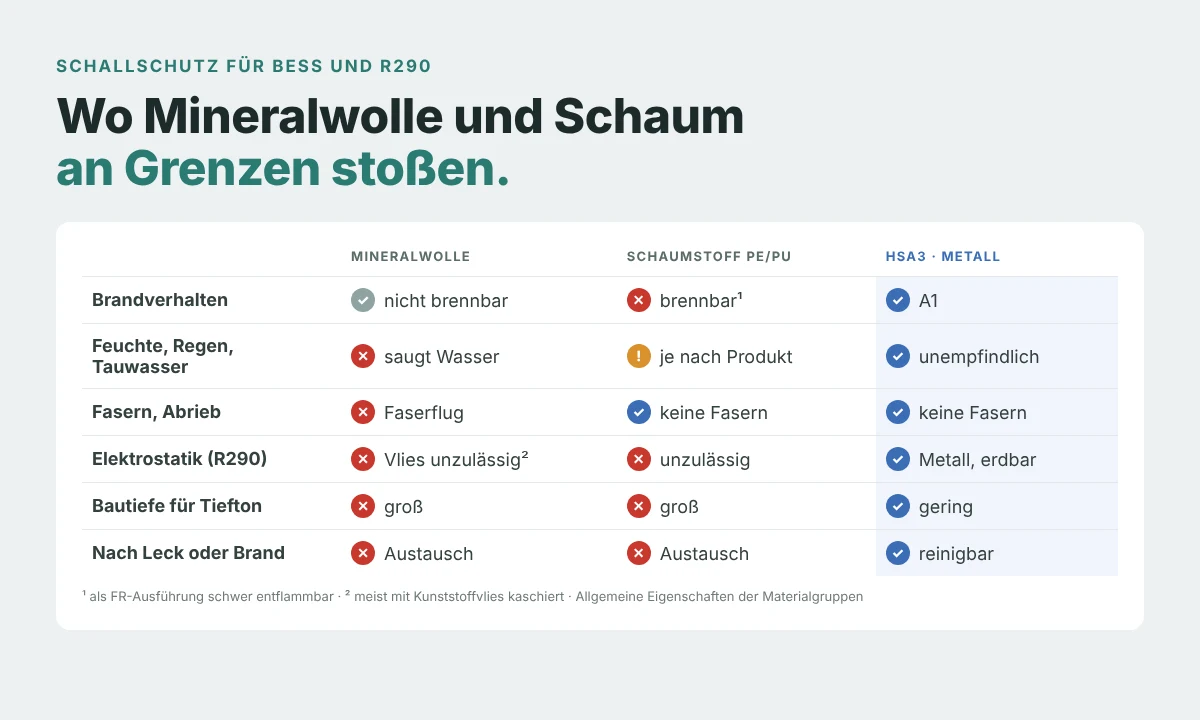
- Patentierte HSA3-Technologie: A1 nicht brennbar, auch für R290 – im Hallraum geprüft
Vordimensionierung sofort im Konfigurator · Listenpreise für Standardhauben · verbindliches Angebot für komplexe Projekte in der Regel in 2–3 Tagen
bis −20 dB(A)subjektiv etwa ¼ der Lautstärke – Standard −15, Premium −20, projektbezogen mehr
max. 3–5 %Leistungseinbuße – bis zu 40 % weniger Druckverlust als klassische Kulissen
A1 nicht brennbarpatentierte Innenverkleidung HSA3 mit Resonanzhohlraum
1 bis viele GeräteEinzelhaube oder gemeinsame Haube für Kaskaden
500+ Projekteseit 2015 – in Europa, den USA und Australien
Wer hinter ForCoTech steht
- 1AuslegungSilent Engineering, Osnago (IT)Akustik, Luftführung (CFD) und Statik – Ihr Ansprechpartner für Angebot und Projekt
- 2Fertigung & Montagegemeinsam mit ABSORA GmbH, BerlinEntwickler und Patentinhaber des Meta-Akustik-Metalls HSA3
- 3Ihre Haubegeliefert und auf Wunsch montiertunter den Marken ForCoTech und Silent-Mode
Romolo Vicari, Gründer. Als Entwickler von Wärmepumpen in China erlebte er, dass der Lärm der Außengeräte zum größten Hindernis werden kann – und entwickelte die passenden Schallhauben selbst. Erste Projekte 2015 in Großbritannien, seitdem über 500 Installationen. Mehr über uns →
Wofür wir Schallhauben bauen
Von der einzelnen Wärmepumpe bis zur Technikzentrale mit mehreren Großwärmepumpen: Jede Haube wird auf das Gerät, den Aufstellort und den geforderten Immissionsrichtwert ausgelegt.
H-Serie · CM-Serie
Großwärmepumpen und Kaskaden →
Wärmepumpen und Großwärmepumpen
Von Kompakt-, Split- und Poolwärmepumpen (H-Serie) bis zur Kaskade mehrerer Großgeräte in einer gemeinsamen Haube (CM-Serie), auch mit R290 (Propan) – Schutzbereich und Gaswarnung inklusive.
Wärmepumpen in Wohngebäuden →Großwärmepumpen und Kaskaden →
Kälte
Katalog Großanlagen →
Kaltwassersätze und Rückkühler
Einhausungen für Chiller, aufgesetzte Schallkulissen für Ventilatoren von Rückkühlern und Verflüssigern – mit geprüfter Luftführung.
Zur Lösung →Katalog Großanlagen →
Neu · Data Center
Rechenzentren
Freistehende Acoustic Packs für Kaltwassersätze und Rückkühler auf dem Dach: Helmholtz-Röhrenschalldämpfer über den Ventilatoren, A1 nicht brennbar, Druckverlust innerhalb der Gerätereserve.
Data-Center-Lösungen →Neu · in Erprobung
Adiabatische Vorkühlung
Schallschutz, der mitkühlt: Das Adiabatik-Modul in der Haube kühlt die Ansaugluft von Kälteanlagen an Hitzetagen um ca. 6–9 K vor – weniger Hochdruckstörungen, leiserer Betrieb. Pilotanwender gesucht.
Zum Adiabatik-Modul →V-Serie · Standardprodukt
Katalog VRF/VRV →
VRF/VRV-Außengeräte
Für horizontale und vertikale Luftführung. Standardhauben passend zu Daikin, Mitsubishi Electric, Panasonic, LG, Samsung, Toshiba und Haier, auch als Modulkombination.
ab ca. 15.500 € netto
Zur Lösung →Katalog VRF/VRV →
Neu · Standardprodukt
Katalog PV-Wechselrichter →
PV-Wechselrichter und BESS
Ausgelegt auf die typischen Pegelspitzen bei 16–18 kHz. Schützt zusätzlich vor Sonne und Hitze (Derating), Regen, Hagel und Staub. Wandmontage oder freistehend für 1 bis 5 Wechselrichter – u. a. Huawei, SMA, Fronius, Sungrow.
ab ca. 4.400 € netto
Zur Lösung →Katalog PV-Wechselrichter →
Wall-Serie
Schallwand konfigurieren →
Schallwände und Montageplattformen
Wo eine vollständige Einhausung nicht möglich ist. Die Minderung ist geringer als bei einer Haube – oft reichen aber schon 6 bis 10 dB(A), um die Richtwerte einzuhalten.
Zur Lösung →Schallwand konfigurieren →
Was unsere Hauben auszeichnet
Drei Punkte, auf die es beim Schallschutz für luftgekühlte Anlagen ankommt.
Akustik
Leise – mit Nachweis
Typisch −15 bis −20 dB(A), projektbezogen mehr. Den Pegel am Immissionsort rechnen wir vorab nach TA Lärm – Sie wissen vor der Bestellung, ob die Richtwerte eingehalten werden.
Auslegung →Strömung
Ohne Leistungsverlust
Akustik und Luftführung legen wir gemeinsam aus, per CFD-Simulation. Die HSA3-Verkleidung hat bis zu 40 % weniger Druckverlust als klassische Kulissen – der Ventilator muss nicht höher drehen.
Luftführung →Sicherheit
Nicht brennbar, auch für R290
Innenverkleidung HSA3 nach A1 nicht brennbar, modulare Aluminium-Bauweise. Für Propan-Anlagen in bodenoffener Ausführung mit Schutzbereich und Gaswarnung.
R290 →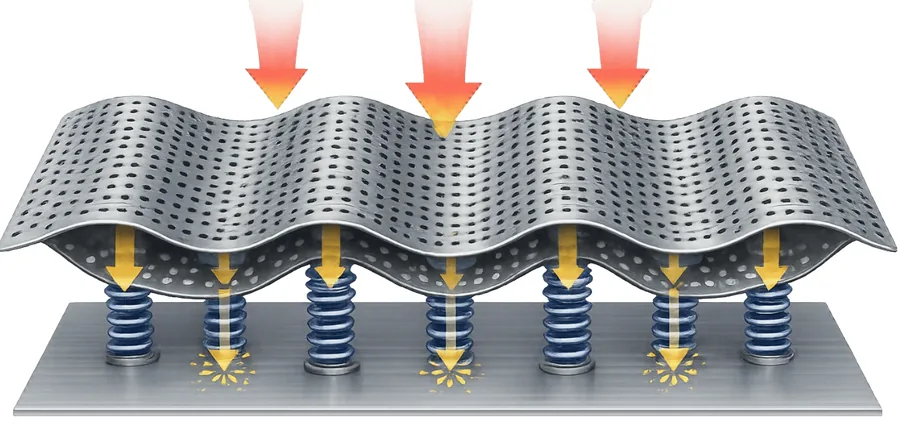
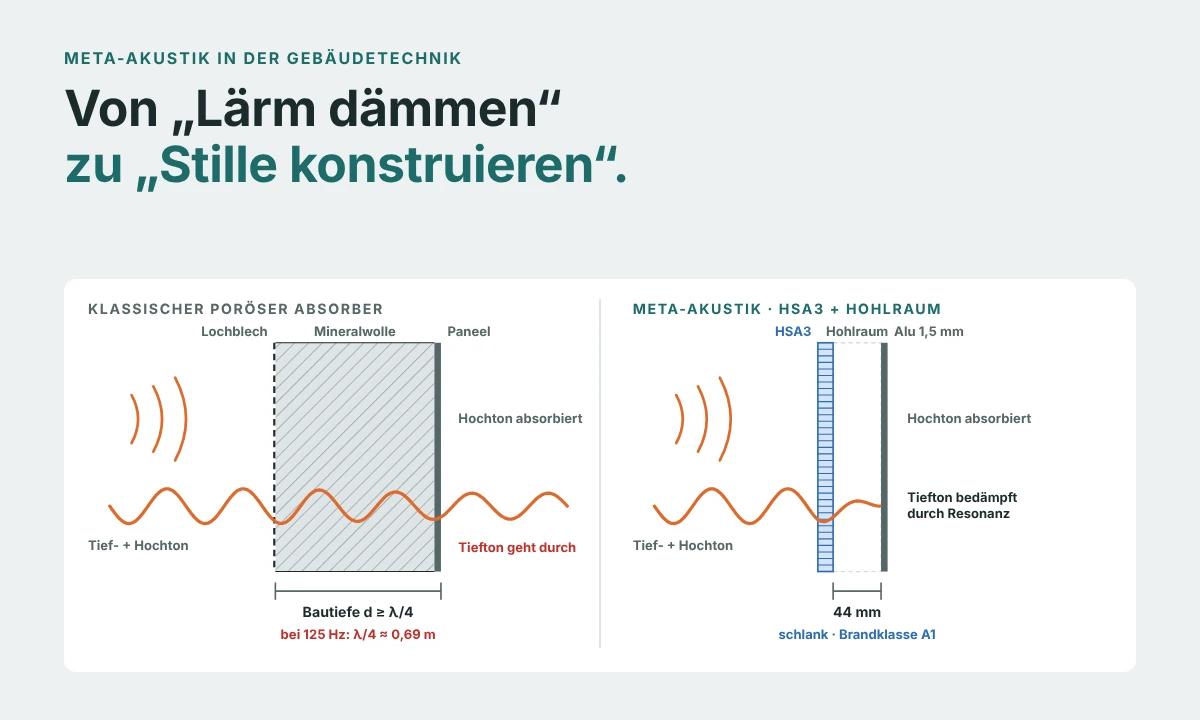
So wirkt HSA3
HSA3 im Detail →
Masse-Feder-Prinzip mit Resonanzhohlraum
Das gelochte Meta-Akustik-Metall schwingt über einem Resonanzhohlraum und wandelt Schallenergie in Bewegung um. Ergebnis: hohe Dämpfung bei glatter, offener Oberfläche – A1 nicht brennbar und bis zu 40 % weniger Druckverlust als klassische Kulissen.
Gemessen im Projekt Berlin-Adlershof →HSA3 im Detail →
Hören Sie den Unterschied
Originalaufnahmen im 3-Sekunden-Wechsel: erst ohne, dann mit Einhausung – Kopfhörer empfohlen.
PV-Wechselrichterohne Einhausung
Aufnahme an einer Wechselrichter-Einhausung
Maschinen-Einhausungohne Einhausung
Aufnahme an einer Maschinen-Einhausung
Aufnahmen: ABSORA GmbH. Die Lautstärke einer Aufnahme ist kein Messwert; maßgeblich ist die Pegelberechnung bzw. Messung am Immissionsort.
Ausführungsbeispiele
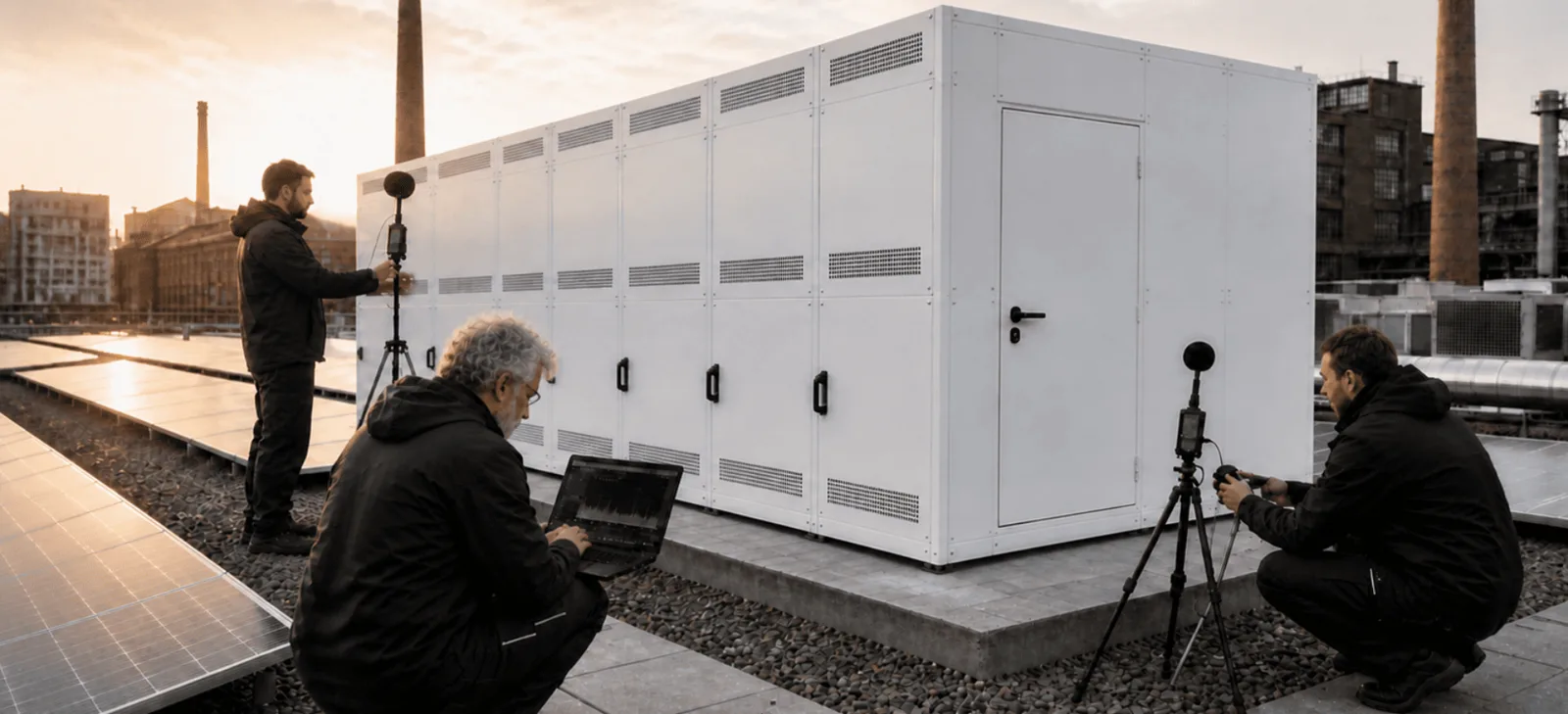
Farbe, Größe und Aufbau richten sich nach Gerät und Umgebung – von der kompakten Einzelhaube bis zur begehbaren Großeinhausung auf dem Dach.
Beim Abspielen wird das Video von YouTube geladen; dabei werden Daten an Google übermittelt. Mehr dazu in der Datenschutzerklärung.
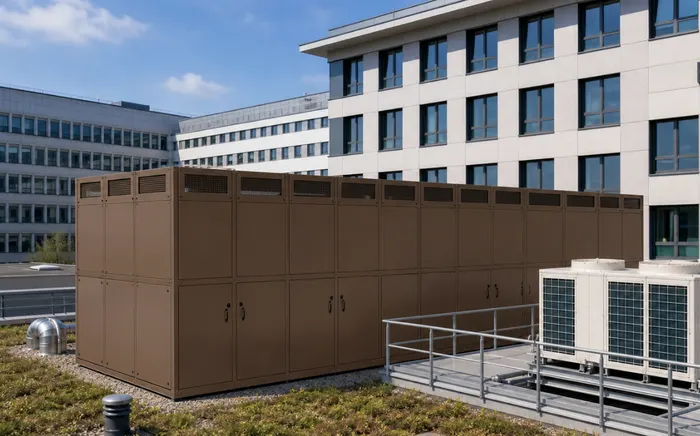
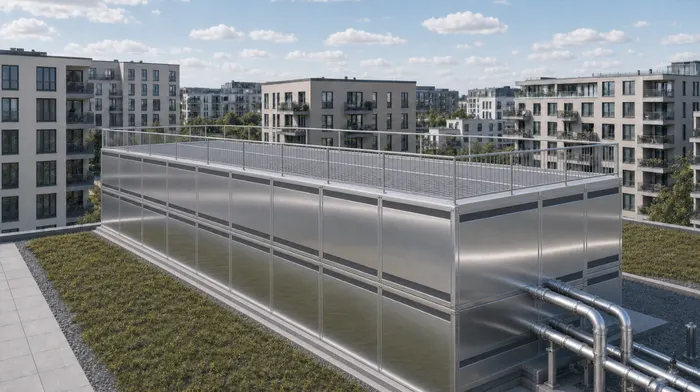
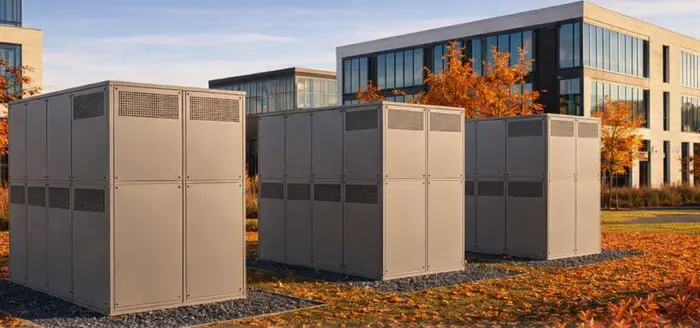
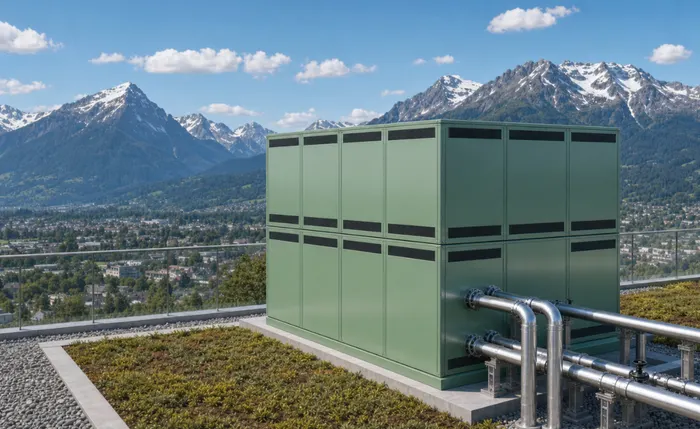
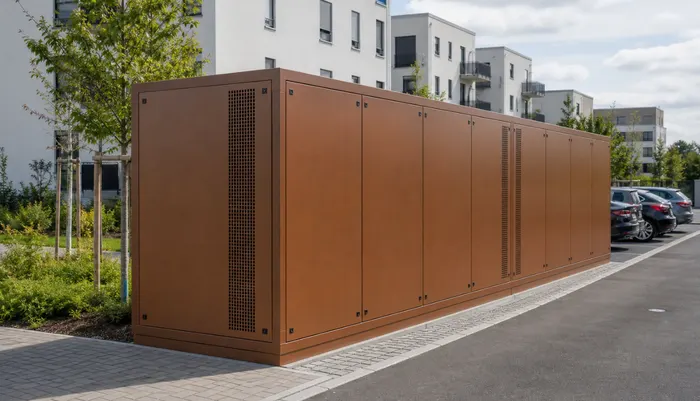
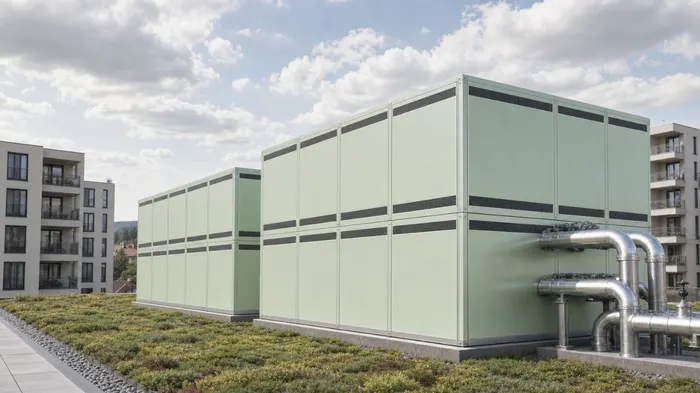
Abbildungen: Visualisierungen zur Veranschaulichung von Ausführungsvarianten.
So läuft ein Projekt ab
Von der ersten Vordimensionierung bis zur fertigen Haube.
Konfigurieren
Gerät, Maße und Akustik im Online-Konfigurator eingeben – Außenmaße, Pegelminderung, Druckverlust und Windlast sofort, für Standardhauben auch der Listenpreis. Für Planer mit Auslegungsblatt, Ausschreibungstext und BIM-Modell (IFC).
Auslegen
Unser Engineering prüft Akustik, Druckverlust und Statik projektbezogen, u. a. mit CFD.
Angebot
Verbindliches Angebot mit Zeichnung, Leistungsumfang und Liefertermin – bei komplexen Projekten in der Regel in 2–3 Tagen.
Fertigung & Montage
Fertigung mit Absora-Technologie, Lieferung und auf Wunsch Montage vor Ort. Sonderanfertigungen in der Regel 40–60 Tage ab Bestelleingang.
Was wir vorab wissen müssen
- Luftvolumenstrom (m³/h) oder Kälte- bzw. Heizleistung (kW)
- Hersteller und Modellnummer der Anlage
- Abstand zum nächsten Immissionsort und dort geltender Richtwert
- Aufstellung auf Flachdach (Gewichtslimit) oder Bodenplatte
- Vorhandene Schallmessung, Pläne zur Montagesituation, Aufmaß oder CAD-Daten des Geräts
Über uns
Hinter ForCoTech und Silent-Mode steht Romolo Vicari. Bei der Entwicklung von Wärmepumpen in China wurde ihm klar, dass der Lärm der Außengeräte zum größten Hindernis werden kann – also entwickelte er die passenden Schallhauben selbst.
2015 wurden die ersten Projekte in Großbritannien realisiert. Seitdem sind Schallhauben in ganz Europa im Einsatz, in kleineren Stückzahlen auch in den USA und bis nach Australien. Seit 2024 führt Silent Engineering di Romolo Vicari mit Sitz in Osnago (Italien) die Entwicklung fort.
Bei der Auslegung setzen wir konsequent auf digitale Werkzeuge – KI, BIM und CFD. Gefertigt wird in Allianz mit der ABSORA GmbH, Berlin.
Häufige Fragen
Für welche Geräte baut ForCoTech Schallhauben?
Für Luft-Wasser-Wärmepumpen und Großwärmepumpen, Kaltwassersätze, Rückkühler, VRF/VRV-Außengeräte, PV-Wechselrichter und Batteriespeicher (BESS), auch für Rechenzentren – einzeln oder als gemeinsame Haube für mehrere Geräte in Kaskade.
Wie viel Schallminderung ist möglich?
Die Standardausführung erreicht ca. −15 dB(A), die Premiumausführung ca. −20 dB(A). Projektbezogen werden die Hauben auf die Richtwerte der TA Lärm am maßgeblichen Immissionsort ausgelegt.
Was kostet eine Schallhaube?
Standardhauben für PV-Wechselrichter beginnen bei ca. 4.400 € netto, Standardhauben für VRF/VRV-Außengeräte bei ca. 15.500 € netto (ohne Montage, zzgl. MwSt. und Fracht). Für die H-Serie und die meistverkauften Großanlagen nennen die Katalogseiten im Konfigurator feste Listenpreise. Alle anderen Hauben legen wir projektbezogen aus – den Preis erhalten Sie mit dem Angebot, bei komplexen Projekten meist innerhalb von 2–3 Tagen.
Geht das auch mit R290 (Propan)?
Ja, mit schriftlicher Freigabe des Geräteherstellers und einer Bauweise ohne Boden, in der ausgetretenes Propan frei nach unten abfließen kann. Keine Zündquellen in der Haube (außer Ex-Ausführung), dauerhaft offene Lüftungsöffnungen; bei Bedarf Gaswarnanlage mit Ex-geschützter Zwangslüftung.
Leidet die Effizienz der Anlage?
Luftführung und Druckverlust werden mit CFD-Simulation ausgelegt; die Luftgeschwindigkeit wird begrenzt und gegen die verfügbare Pressung des Ventilators geprüft, damit die Leistungseinbuße auf max. 3–5 % begrenzt bleibt. HSA3 hat dabei bis zu 40 % weniger Druckverlust als konventionelle Kulissen.
Wie lange dauern Fertigung und Lieferung?
Sonderanfertigungen werden in der Regel innerhalb von 40–60 Tagen ab Bestelleingang geliefert. Das verbindliche Angebot für komplexe Projekte erhalten Sie meist innerhalb von 2–3 Tagen; der Liefertermin steht im Angebot.
Warum nennen Sie keine Referenzprojekte mit Namen?
Die Anlagen gehören nach der Lieferung unseren Kunden. Deshalb veröffentlichen wir weder Kundennamen noch Standorte ohne deren ausdrückliche Zustimmung. Wie unsere Anlagen aussehen, zeigen die neutralisierten Beispielangebote.
Projekt anfragen
Gerät, Anzahl und Aufstellort genügen für den Anfang – mit Datenblatt prüfen wir Maße, Luftmenge und Schallleistung direkt. Ein verbindliches Angebot für komplexe Projekte erhalten Sie in der Regel in 2–3 Tagen.
Vielen Dank für Ihre Anfrage!
Wir melden uns in der Regel innerhalb von 2–3 Werktagen.
Wir melden uns in der Regel innerhalb von 2–3 Werktagen.
Silent Engineering di Romolo Vicari
Marken ForCoTech und Silent-Mode
Via Trento 22 · 23875 Osnago (LC) · Italien
E-Mail: info@forcotech.com
Web: silent-mode.com
Marken ForCoTech und Silent-Mode
Via Trento 22 · 23875 Osnago (LC) · Italien
E-Mail: info@forcotech.com
Web: silent-mode.com
Lieber selbst vordimensionieren?